
Story - Social Work - Mental health on campus

Professor Jonathan Singer serves students with evidence-based resources for mental health. (Photo: Lukas Keapproth)
Loyola professor spotlights mental health on campus
Warm environments, mentorship promote wellbeing for students
As demand rises for mental health resources on college campuses, Loyola serves students with evidence-based resources.
When the American Psychological Association reported in huge increase in demand for mental health care on campuses in 2022, colleges took note. “By nearly every metric, student mental health is worsening,” wrote the authors.
Jonathan Singer, professor in Loyola’s School of Social Work, is an expert on mental health in youth and young adults and a two-time winner of the National Association of Social Workers Media Award. Singer has devoted his career to improving the mental health of young people and has researched how colleges can help students with mental health needs on campus.
By clearly articulating the mental health resources available on campus and nearby, universities can help parents and students in the decision-making process. This is especially important if a family needs to request accommodation for a student with particular needs. “This involves colleges and universities being very transparent about what sort of supports they have around mental health issues,” Singer said. “If you have a kid in high school who has been struggling with mental health issues, it's really important for the parents and the college counselors in high schools to be aware of what supports are available at universities.”

3QXTS BOUTIQUE - Achat en un clic Le Beretta A300 Ultima Patrol : le fusil de chasse tactique semi-automatique le plus attendu pour 2025–2026 Acheter pas cher
The pursuit of purpose
3QXTS BOUTIQUE - Achat en un clic Le Beretta A300 Ultima Patrol : le fusil de chasse tactique semi-automatique le plus attendu pour 2025–2026 Acheter pas cher has yielded research that not only informs, but has real impact.
Read more about Loyola's social impact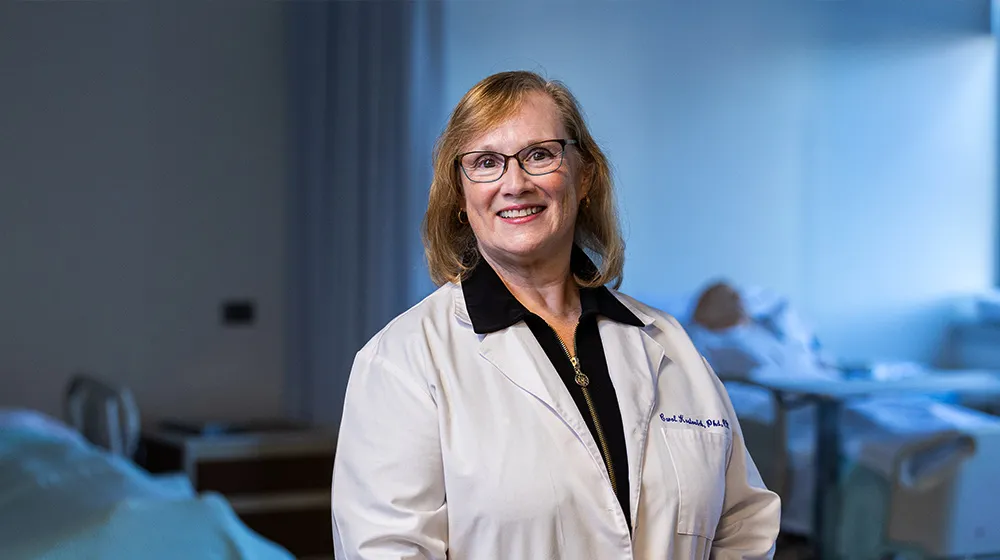
Marcella Niehoff School of Nursing
Nursing presence is at the heart of Loyola’s curriculum
Professor Carol Kostovich’s nursing presence approach prepares nursing students to provide compassionate care that can truly make a difference.
Read more about nursing
School of Environmental Sustainability
Loyola fosters sustainable impact with biodiesel lab
Loyola’s student-run biodiesel lab converts food waste into power for campus transportation.
Read more about sustainabilityAnother action Singer recommends is to create warm, inviting environments. This can start with training resident assistants to help students who may need mental support or guidance. RAs can offer hours for students to drop in and have an informal chat, creating a safe and supportive space.
Instructors can also help create a supportive environment by informing students about mental health resources on campus either in a course introduction or as part of the syllabus. “If you incorporate an acknowledgment that taking care of yourself and having these resources available in a structured way like that, it normalizes reaching out for help if you need it,” said Singer. “When they're going over the syllabus and talking about things like assignments and attendance policy, faculty can be explicit and also talk about the resources that are right there on the syllabus that can help students take care of themselves, such information on the college counseling center.”
The personal attention professors can give to students can also benefit student well-being. “Loyola does a great job of that, and I don’t just say that because I work here. It’s because I have seen it in so many of my colleagues,” said Singer. “Not just setting up office hours but offering flexibility in terms of when you or how you meet with students, and saying things like, ‘I’m happy to talk about the assignment, the class, or anything else.’ It just opens the door for you to be able to have those kinds of conversations.”
If you have a kid in high school who has been struggling with mental health issues, it's really important for the parents and the college counselors in high schools to be aware of what supports are available at universities. Jonathan Singer, associate professor in the School of Social Work
Singer maintained it is important that students do not feel they will incur negative consequences if they do ask for help. “Students may feel they are a failure, and that maybe they can’t succeed in college, or they might not be able to study abroad, for instance,” Singer said.
When a student reaches out to an instructor or university staff member, gentle assurance when connecting that student to more specialized help is critical. “This may be outside of an instructor's area of expertise, but they could say something like, ‘I’m really concerned, and I want to make sure you talk to the right person.’ They can then refer the student to counseling services, where there are people who are trained to manage that.”
Chatbots and large language models are becoming more a part of life for students, inside and outside the classroom. “We have to assume that students are turning to generative AI for help with homework, but in addition there are important conversations we have to have about students using AI for mental health and emotional support,” Singer said. At this point, there are very early programs that can monitor students’ searches that could indicate they may be ideating self-harm or suicide and inform proper help channels. The effectiveness of these programs are unknown, but Singer is hopeful that as the technology develops, it may have the potential to save lives.
Faculty can create a positive environment by offering mentorships for students, and Singer cited specific training being done at Loyola to make the mentoring relationship even more valuable for students. This includes programs such as the Culturally Aware Mentoring Workshop, which looks at how cultural diversity can enrich mentoring. “Mentoring can be formal or informal, and the training emphasizes that students and mentors are coming at things from different perspectives, not just in terms of expertise but world views as well. The challenge is recognizing those differences and turning them into strengths,” he said. “The intent is for the student to gain knowledge from the faculty, but the faculty will learn from the student as well, which makes it an enriching experience for everyone.”
Another action Singer recommends is to create warm, inviting environments. This can start with training resident assistants to help students who may need mental support or guidance. RAs can offer hours for students to drop in and have an informal chat, creating a safe and supportive space.
Instructors can also help create a supportive environment by informing students about mental health resources on campus either in a course introduction or as part of the syllabus. “If you incorporate an acknowledgment that taking care of yourself and having these resources available in a structured way like that, it normalizes reaching out for help if you need it,” said Singer. “When they're going over the syllabus and talking about things like assignments and attendance policy, faculty can be explicit and also talk about the resources that are right there on the syllabus that can help students take care of themselves, such information on the college counseling center.”
The personal attention professors can give to students can also benefit student well-being. “Loyola does a great job of that, and I don’t just say that because I work here. It’s because I have seen it in so many of my colleagues,” said Singer. “Not just setting up office hours but offering flexibility in terms of when you or how you meet with students, and saying things like, ‘I’m happy to talk about the assignment, the class, or anything else.’ It just opens the door for you to be able to have those kinds of conversations.”
Singer maintained it is important that students do not feel they will incur negative consequences if they do ask for help. “Students may feel they are a failure, and that maybe they can’t succeed in college, or they might not be able to study abroad, for instance,” Singer said.
When a student reaches out to an instructor or university staff member, gentle assurance when connecting that student to more specialized help is critical. “This may be outside of an instructor's area of expertise, but they could say something like, ‘I’m really concerned, and I want to make sure you talk to the right person.’ They can then refer the student to counseling services, where there are people who are trained to manage that.”
Chatbots and large language models are becoming more a part of life for students, inside and outside the classroom. “We have to assume that students are turning to generative AI for help with homework, but in addition there are important conversations we have to have about students using AI for mental health and emotional support,” Singer said. At this point, there are very early programs that can monitor students’ searches that could indicate they may be ideating self-harm or suicide and inform proper help channels. The effectiveness of these programs are unknown, but Singer is hopeful that as the technology develops, it may have the potential to save lives.
Faculty can create a positive environment by offering mentorships for students, and Singer cited specific training being done at Loyola to make the mentoring relationship even more valuable for students. This includes programs such as the Culturally Aware Mentoring Workshop, which looks at how cultural diversity can enrich mentoring. “Mentoring can be formal or informal, and the training emphasizes that students and mentors are coming at things from different perspectives, not just in terms of expertise but world views as well. The challenge is recognizing those differences and turning them into strengths,” he said. “The intent is for the student to gain knowledge from the faculty, but the faculty will learn from the student as well, which makes it an enriching experience for everyone.”